
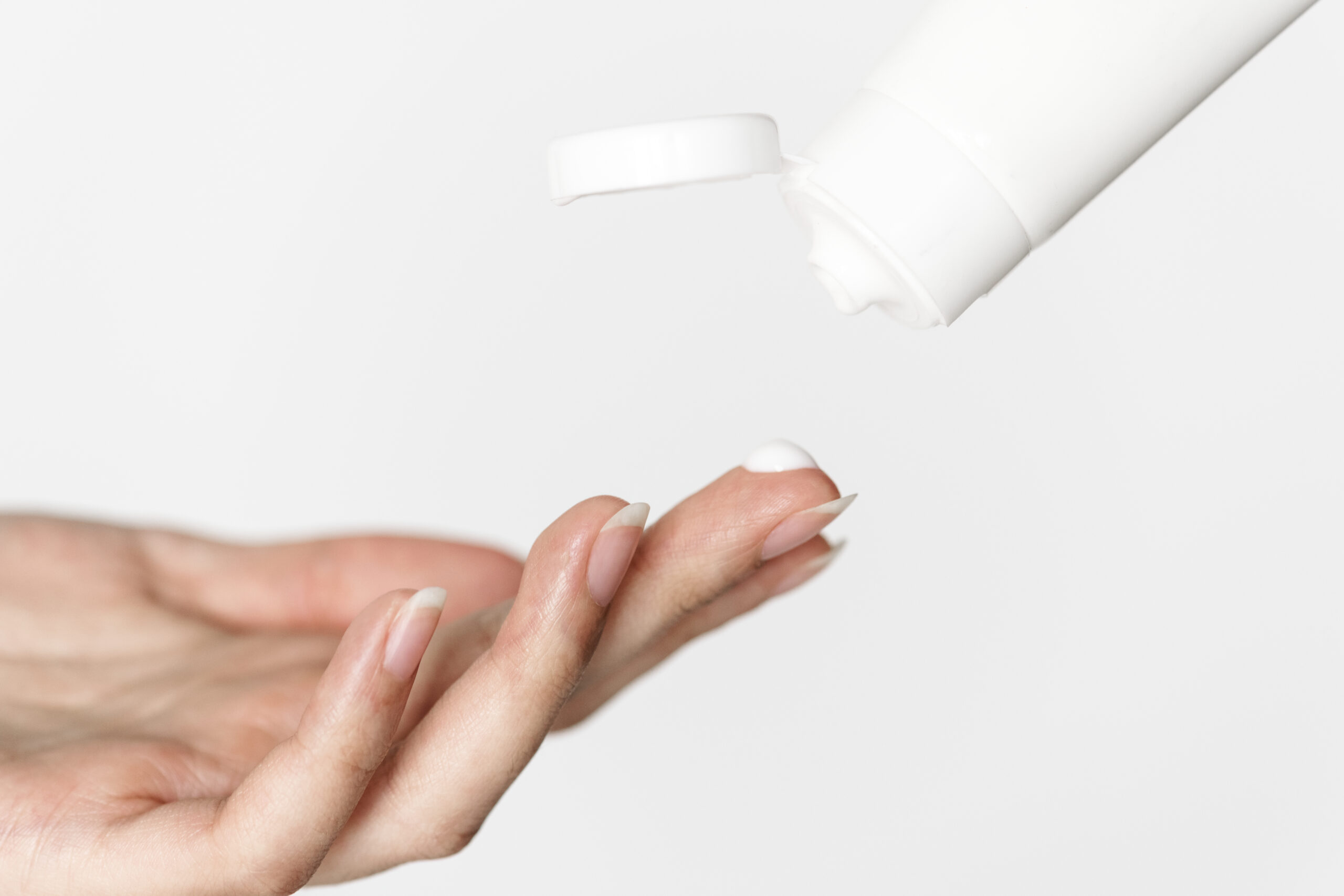
Telehealth dermatology providers increasingly face questions about GHK Cu peptide formulations from both prescribers and patients. The distinction between compounded preparations and commercial serums significantly impacts treatment outcomes and patient satisfaction.
Compounded formulations deliver pharmaceutical-grade customization that retail products cannot match. This article examines why specialized compounding represents a competitive advantage for telehealth companies offering advanced dermatology protocols.
What Is GHK-Cu?
GHK-Cu is a naturally occurring tripeptide with the amino acid sequence glycyl-L-histidyl-L-lysine. The peptide forms a stable complex with copper ions that drives its biological activity.
Human plasma concentrations decline dramatically with age (approximately 200 ng/mL at age 20 to just 80 ng/mL by age 60). This decrease correlates with reduced regenerative capacity in aging tissues.
How Does the GHK Cu Peptide Work?
The copper peptide functions through multiple mechanisms that support skin regeneration and repair. It modulates both collagen synthesis and breakdown. This creates balanced extracellular matrix remodeling rather than simple accumulation.
GHK-Cu regulates matrix metalloproteinases and their inhibitors (TIMP-1, TIMP-2), which control the breakdown of damaged collagen. This dual action on production and degradation distinguishes it from many other anti-aging compounds.
Research demonstrates that GHK-Cu can up- or downregulate over 4,000 human genes. This broad genetic effect essentially resets DNA expression patterns toward healthier states associated with younger tissue.
What Wound Healing Properties Make GHK-Cu Clinically Valuable?
The peptide attracts immune and endothelial cells to injury sites to accelerate the initial healing response. Studies confirm enhanced wound contraction and faster closure rates in both animal models and human trials.
GHK-Cu restores replicative vitality to damaged fibroblasts, including those impaired by radiation therapy. This regenerative capacity makes it particularly valuable for post-procedure protocols and photoaging treatment.
Anti-inflammatory mechanisms complement the healing properties. The GHK Cu peptide reduces TNF-alpha-induced IL-6 secretion in dermal fibroblasts to moderate excessive inflammation that can delay healing or promote scarring.
Clinical evidence documents improvements in:
- Skin density and thickness through collagen stimulation
- Fine lines and wrinkle depth via matrix remodeling
- Skin laxity and firmness from enhanced structural proteins
- Photodamage and hyperpigmentation through gene expression modulation
Commercial Copper Peptide Serum Limitations
Most over-the-counter serums contain 0.5-1% concentrations based on marketing considerations rather than therapeutic optimization. These fixed formulations cannot accommodate patient variability or treatment progression.
Why Can’t Commercial Products Offer Customization?
Retail products must standardize formulations for mass production and extended shelf stability. Manufacturing economics prevent individualized concentration adjustment or vehicle modifications for different skin types.
Commercial serums operate under cosmetic regulations rather than pharmaceutical standards. This distinction limits their therapeutic positioning and quality control requirements compared to compounded medications.
The one-size-fits-all approach fails diverse patient populations with varying skin sensitivities, treatment goals, and response patterns. A concentration ideal for one patient may prove insufficient or irritating for another.
What Stability Concerns Affect Commercial Formulations?
Copper complexes require careful pH management and preservation systems to maintain activity. Commercial formulations often include multiple “active” ingredients that complicate the chemical environment and accelerate degradation.
Marketing-driven ingredient inclusion prioritizes label appeal over formulation science. Botanical extracts, additional peptides, and other active pharmaceutical ingredients may interfere with GHK-Cu stability or penetration.
Packaging designed for retail aesthetics frequently compromises preservation. Transparent containers, wide-mouth jars, and pump dispensers expose formulations to light and air that degrade copper peptide complexes.
Compounded GHK-Cu: Concentration Control Advantages
Pharmaceutical compounding enables precise concentration adjustment from 0.1% to higher therapeutic levels based on individual patient assessment. This flexibility represents a fundamental advantage over commercial products.
How Does Concentration Customization Improve Outcomes?
Treatment protocols can start with lower concentrations (0.1-0.5%) for sensitive skin or first-time users. Prescribers can increase strength progressively as tolerance develops and response patterns emerge.
Severe photoaging or post-procedure applications may require higher concentrations (1-3%) that commercial serums don’t provide. Compounded formulations deliver these therapeutic levels while maintaining pharmaceutical-grade stability.
Patient-specific factors guide concentration selection:
- Skin sensitivity and baseline reactivity to active ingredients
- Treatment area characteristics (facial versus body applications)
- Severity of photoaging or scarring requiring intervention
- Concurrent medications that may affect tolerance
- Previous response to peptide therapies informing dose optimization
Can Concentration Adjustments Address Treatment Challenges?
When patients experience irritation, compounded formulations allow downward titration while maintaining treatment continuity. If response proves inadequate, concentration increases provide a clear advancement pathway without switching products entirely.
This flexibility supports evidence-based treatment optimization rather than abandoning therapy due to fixed-dose limitations. Providers gain clinical control over treatment intensity that commercial products cannot offer.
Delivery Format Flexibility: Beyond Traditional Serums
Compounded GHK Cu topical preparations extend beyond standard serum bases to include multiple delivery formats. Vehicle selection impacts both patient compliance and therapeutic penetration.
The 0.5% GHK-Cu foam represents an innovative delivery system with several advantages over traditional bases. Foam formulations spread more uniformly across treatment areas and provide enhanced skin penetration through improved contact.
Cream bases suit patients preferring richer textures or requiring occlusive properties for extremely dry skin. Solution formats work well for scalp applications or areas where non-greasy formulations improve compliance.
Format selection considers:
- Treatment area anatomy (face, neck, hands, body)
- Patient cosmetic preferences affecting daily use consistency
- Skin type characteristics (oily, dry, combination, sensitive)
- Concurrent product layering in multi-step regimens
- Absorption enhancement needs for deeper penetration
Each delivery system maintains the active GHK-Cu complex while optimizing patient experience. This variety enables prescribers to match formulation to individual preferences and improve long-term compliance.
Combination Therapy Opportunities in Compounded Formulations
Combination therapy telehealth dermatology protocols often produce superior outcomes compared to single-agent approaches. Compounded formulations uniquely enable integration of complementary active pharmaceutical ingredients in a single preparation.
What Combinations Enhance GHK Cu Peptide Efficacy?
Tretinoin plus GHK-Cu addresses photoaging through dual mechanisms: cellular turnover acceleration and collagen remodeling. Compounding both active pharmaceutical ingredients together ensures compatibility and eliminates application timing concerns.
Niacinamide integration supports barrier function while GHK-Cu drives structural improvements. This combination addresses multiple aging pathways in a single pharmaceutical-grade formulation.
Vitamin C provides antioxidant protection that complements GHK-Cu’s regenerative properties. Proper compounding maintains the stability of both active pharmaceutical ingredients, which presents challenges in commercial formulations.
Hyaluronic acid inclusion enhances hydration alongside the matrix-building effects of GHK Cu peptides. These combined benefits address both surface texture and deeper structural concerns.
Why Can’t Commercial Products Offer These Combinations?
Mass-market formulations cannot accommodate prescriber-directed combinations or patient-specific active ratios. Manufacturing constraints require fixed formulas that don’t adapt to individual treatment needs.
Stability challenges multiply when combining multiple active pharmaceutical ingredients and requires pharmaceutical expertise that exceeds cosmetic formulation standards. We maintain compatibility through proper pH balancing and strategic preservative selection.
Custom combination protocols differentiate telehealth practices by offering precision that commercial medications cannot replicate. This capability becomes a competitive advantage for sophisticated dermatology programs.
Clinical Applications: When Compounded GHK-Cu Is Preferred
Specific patient scenarios particularly benefit from compounded formulations over commercial alternatives. Understanding these applications helps telehealth companies develop targeted protocols.
Which Post-Procedure Situations Require Customized Formulations?
Laser resurfacing, chemical peels, and microneedling create controlled injury that triggers healing responses. GHK Cu topical applications during recovery may enhance outcomes through wound healing mechanisms.
Post-procedure skin exhibits variable sensitivity requiring concentration control. Starting with 0.1-0.3% GHK-Cu immediately after procedures minimizes irritation risk while supporting regeneration.
Higher concentrations (0.5-1%) can be introduced as acute inflammation resolves. This graduated approach requires compounding flexibility.
How Does Severe Photoaging Benefit from Compounded Approaches?
Advanced sun damage often requires higher therapeutic concentrations than commercial serums provide. Compounded formulations delivering 1-3% GHK-Cu target significant structural deficits and extensive photodamage.
Combination protocols for severe cases integrate tretinoin, antioxidants, and peptides at prescription strengths. These complex formulations require pharmaceutical-grade preparation and cannot be replicated through retail products.
When Does Sensitive Skin Necessitate Lower Concentrations?
Patients with reactive skin, rosacea, or barrier dysfunction benefit from 0.1-0.25% starting concentrations. Commercial products rarely offer these lower strengths, which limits options for sensitive populations.
Gradual tolerance building prevents treatment discontinuation due to irritation. We compound incremental strengths (0.1%, 0.2%, 0.3%) that support systematic desensitization protocols.
Which Complex Conditions Require Multi-Active Formulations?
Melasma, post-inflammatory hyperpigmentation, and acne scarring often need combined approaches. Compounded formulations integrate GHK-Cu with depigmenting agents, retinoids, and other targeted active pharmaceutical ingredients in pharmaceutical-grade preparations.
These complex cases demonstrate the clinical value of compounding for telehealth DTC fulfillment models serving diverse patient needs.
Conclusion: Precision Formulation as Competitive Advantage
Compounded GHK-Cu formulations deliver therapeutic advantages that commercial serums fundamentally cannot replicate. Concentration control, delivery format flexibility, and combination therapy capabilities differentiate pharmaceutical preparations from retail products.
For telehealth dermatology platforms, formulation precision directly impacts clinical outcomes and patient retention. The ability to customize concentrations, adjust vehicles, and combine complementary active pharmaceutical ingredients creates treatment flexibility that distinguishes sophisticated practices.
As patient expectations for personalized medicine increase, standardized commercial products become insufficient for advanced protocols. Evidence-based prescribers recognize that formulation science matters for optimizing therapeutic results.
At Precision Medicine, we provide specialized compounding capabilities that enable telehealth companies to offer differentiated dermatology protocols. Our pharmaceutical-grade GHK-Cu preparations deliver the customization and quality that evidence-based practices require for competitive positioning in an evolving telehealth market.
Frequently Asked Questions
What does GHK Cu peptide do?
GHK-Cu modulates multiple cellular pathways involved in skin regeneration. The peptide regulates both collagen synthesis and breakdown to maintain balanced extracellular matrix remodeling.
It delivers copper ions to cellular enzymes required for antioxidant defense, connective tissue formation, and cellular respiration. Research shows GHK-Cu can regulate over 4,000 human genes and reset expression patterns toward healthier states.
Clinical applications include photoaging treatment, wound healing support, and skin density improvement through stem cell activation and repair cell recruitment.
What is the difference between compounded GHK Cu topical formulations and over-the-counter copper peptide serums?
Compounded preparations follow USP 795 pharmaceutical standards while commercial serums operate under cosmetic regulations. Compounding achieves precise concentration control (0.1-3%) while commercial products use fixed strengths (typically 0.5-1%).
Customization represents a critical advantage. Compounded formulations adjust for individual patient needs and treatment progression. Regulatory oversight, quality assurance, and stability testing exceed cosmetic industry standards in pharmaceutical compounding.
How long does GHK Cu topical treatment take to show results?
Most clinical studies document measurable improvements after 12 weeks of consistent application. Some patients report subtle texture changes within 4-6 weeks, but visible improvements in wrinkles and firmness typically require longer treatment.
Combination protocols may show faster results through synergistic mechanisms. Treatment consistency significantly impacts outcomes. Daily application produces better results than sporadic use.